What F1 taught me about B2B sales. Kidding, about marketing.
This morning I found myself thinking of Bernie Ecclestone. If you found the sport of F1 later on, or if you have yet to discover it (wink wink), he’s the guy who basically ran the sport for decades with an iron fist.
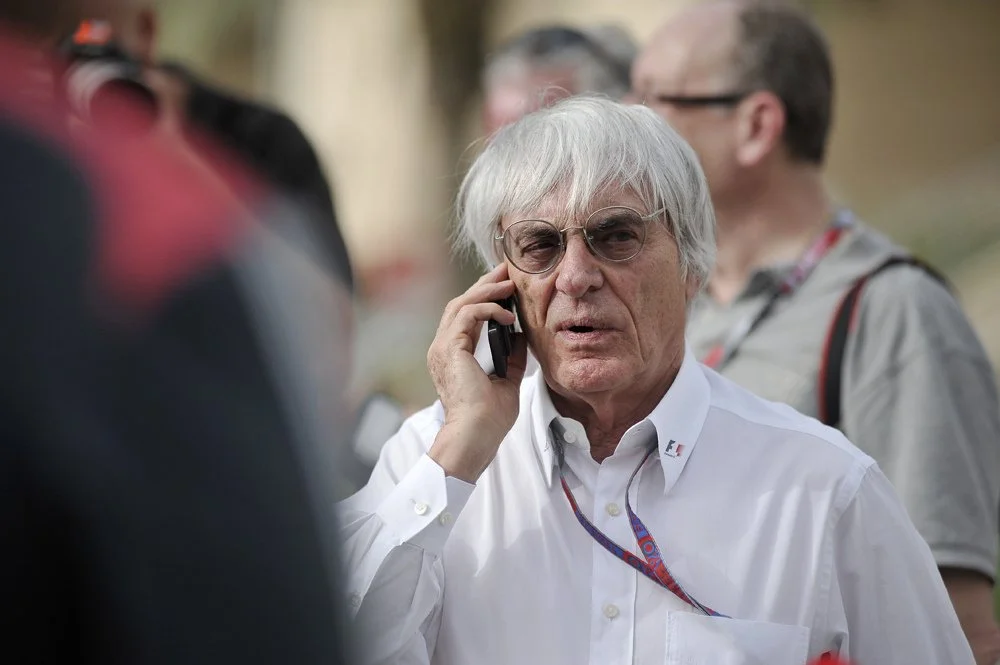
His philosophy was simple: Formula 1 is for the elite, the people who can afford a Rolex. If you’re under 40 and don't have a private jet, you weren’t really the target audience. It was shielded, guarded, and intentionally exclusive.
But look at F1 today. It’s owned by American Liberty instead of the British business magnate Ecclestone. So you know it’s gonna be Lego helmets and Disney partnerships. It’s Brad Pitt filming a blockbuster with a Hans Zimmer score. It’s the Netflix effect! It hasn't just gone mainstream, it’s become a cultural juggernaut that somehow managed to make "aerodynamic drag" a dinner table conversation.
So, what happened? And why am I yapping about it on a marketing blog? Well, because F1 solved the "landing vs. traveling" problem I wrote about a few weeks (months?) ago. Here is what I’m thinking of specifically:
The "human-Interest" layer is the strongest hook
Before Drive to Survive, F1 was a purely technical sport. It was about engines and fuel mixtures. But Netflix realized that nobody (outside of the hardcore fans with deep technical knowledge) actually cares about the MGU-H unit. They care that the two drivers on the same team secretly want to run each other off the road, and they care about how it’s handled behind the scenes. In B2B, we often lead with the "engine specs" (ya know, features). We forget that the "driver drama" (the human, emotional part) is what actually makes the story actually travel.
Accessibility isn't the same as "dumbing it down"
Ecclestone thought that making F1 accessible would "cheapen" the brand. He was wrong, sort of. F1 today is arguably worth more as a brand, no doubt, but it’s also part of the culture. You can buy a Lego car for your kid or watch a 40-second TikTok explaining why a pit stop took 2.1 seconds, before forwarding it to your friend. You can be high-tech and sophisticated without being a gatekeeper. If people can't understand your "tactical nuances," they won't advocate for you.
I’ve heard “I bet you hate that everyone watches F1 now” so many times after Drive to Survive launched. And nothing could be further from the truth, because my sport, that I’ve loved since I was a toddler, is finally part of the conversation. People want to talk about it with me! They ask me stuff!! They share content with me!!! It doesn’t matter if you started watching yesterday or 1989 – we’re all welcome.
The ecosystem play
F1 stopped being just a quali on Saturday and a race on a Sunday. It became a 24/7 ecosystem of data, fashion, gaming, and lifestyle. They realized that to grow, they had to be where the people are, not wait for the people to find the private club (which they couldn’t get into anyway).
Of course, social media played a huge part in this, but Bernie Ecclestone was famous for being aggressively restrictive. He owned the rights to every single frame of footage from the race weekends and guarded them like a dragon sitting on gold. His logic was pure old-school elitism: "As long as it’s exclusive, it can be sold at a higher price to the networks." He famously said: "I don't know why people want to get to the 'young generation.' Why do they want to do that? Are they going to buy anything?" .
Everything changed in 2017 when Liberty Media bought the circus. They did the exact opposite. They realized that exposure is the new currency. They opened the gates, let the footage travel on YouTube and TikTok, and realized that 100 million people watching a highlight for free is worth way more in the long run than 1 million people watching behind a $50 paywall.
My somewhat unfinished conclusion?
Bernie thought the brand was the asset – the exclusive footage, the expensive logo, the billionaire handshakes. He thought that by protecting the asset, he was protecting the brand.
But Liberty Media proved that in a digital world, the brand is the conversation, really. When people are making memes about a Haas pit stop or debating tire strategies over coffee, they are building the brand for you. You don't "own" a brand anymore, you just steward the community that surrounds it.
So whether you’re selling a performance marketing platform or a seat in a 1000-horsepower carbon fiber bathtub, the goal is the same: Stop being a gatekeeper and start being a storyteller. Beep beep!